A short story about my first job as an ASIC Engineer.
The Job Hunt
When I graduated from University in Quebec City, I was hoping to get hired at the company where I was an intern for over a year. After my internship at Technologies Lyre, I had accumulated niche experience in Digital Signal Processing.
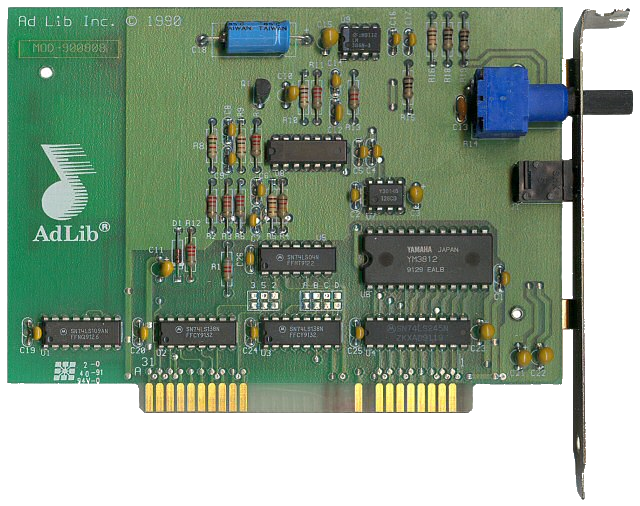
My personal interest was music synthesizers. Technologies Lyre was the design house for a company called AdLib, who created the first PC sound card (which was eventually over-taken by Sound Blaster). It’s hard to imagine today, but back then computers did not have the capability to generate sound. This was made possible by add-on cards, such as the famous PC sound card.
When they did not express any intention of hiring me, I started looking around. I applied to companies in Quebec City, Montreal, and surprisingly, Vancouver. Originally from Alberta, there was something mythical about the city of Vancouver.
When I discovered a company that was looking for someone for the development of their own PC sound card, I was “locked in”.
The Interview Twist
Applying for a job back then was very different from applying for a job today.
E-mail existed, but phone was far more effective … I stacked up a $300 phone bill contacting and following up for an interview at a company called Spectrum Signal Processing. Probably the best investment in time and money I ever did.
I had sent a picture of myself for the interview. During the interview, apparently, someone was animating the picture whenever I talked. I found the interview very cheerful, and learned later that the picture was the cause of cheerfulness. I had already found my nickname: PictureBoy.
During the interview, I discovered that they also had an ASIC team, who were looking for candidates as well. I took the unimaginable decision to flip strategy during the interview, and ask for an interview with the ASIC team.
Surprisingly, they agreed, and I got my decisive interview, with the most amazing human I have ever met: Peter Van Baarsen. He hired me as an ASIC engineer. A career I thought out of reach for someone fresh out of University.
He launched our careers in this cutting-edge field, but for Peter, it was never just about technology … it was always about people.
Peter was Dutch, his door was always open, and he had a bowl of Dutch delicacy, salty black licorice, available for anyone brave enough to try.
His team was small, with impressive resources: a single HP server running Cadence design tools.
The SOLO ASIC Challenge
My first project was to design an “interface ASIC” for Microsoft’s new Plug and Play standard for ISA add-on cards.
Traditional ISA add-on cards had the unfortunate fault of being designed with hard-coded addresses. Microsoft was solving this problem by pushing a standard that made any PC add-on card configurable dynamically. Today this seems obvious, but at the time it was groundbreaking.
Since we were tight on resources, my boss decided that for my project, I was to be the Design Team, as well as the Validation Team. If you know anything about ASIC design, and the importance of validation, you can probably foresee what was inevitably going to happen.
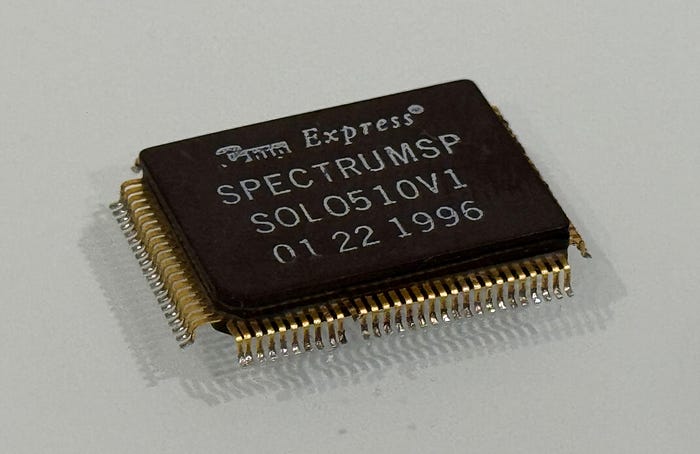
The SOLO ASIC, as we arrogantly called it, was to perform dynamic translation between the dynamically configured addresses and the hard-coded addresses for various peripherals:
- Sound Blaster (sound card)
- Joystick interface
- I actually don’t remember the other interfaces we had on that card …
Not only was I responsible for the ASIC design and the validation, I also designed the PCB, soldered the parts on the board, and wrote all the test software … this was a one-man show. The dream of every ASIC engineer was ‘First Time Success’, 100% functionality after the first tape-out. This was my goal.

The $25,000 Lesson
I somehow got a simple bit-swap error introduced for the Sound Blaster peripheral address … an error that made its way into both the design, and validation suite …
The first prototypes were manufactured with Gate-Array technology. A pre-manufactured silicon die with fully connected layers of metal that were etched away preserving the design’s intent. This technology allowed to manufacture 4 prototypes for the price of $25,000.
When we got the ASIC prototypes back, and started testing … I discovered my error … the Sound Blaster peripheral never responded to any of its intended transactions.
I remember the day I walked into Peter’s office, my stress level at an insane level, and informed him of my $25,000 error.
His response … “Mario, don’t take this too personally, this is what we call an R&D loss. It was my error to allocate the same person for both design and validation.”
For those who are natural solution finders, you will have several suggestions to work-around this error … believe me, we tried them all … due to the mix of 5–6 peripherals, there was no external pin-swapping possible that would work for all the supported peripherals.
We even considered opening the package, and re-working the metal layers of the Gate-Array … even that did not present any possible solutions.
We did re-spin the ASIC, but this time with a validation engineer, Lee Cui, and succeeded in producing a more appropriately named MAR-LEE ASIC, or the “Mario + Lee Team” ASIC.
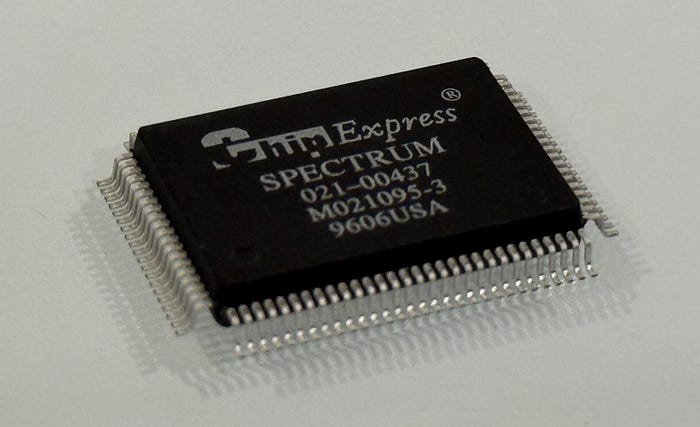
Our next ASIC was prototyped with a more forgiving technology, the Field Programmable Gate Array. Although each device was more costly, they could be reprogrammed endlessly … an amazing innovation at the time!
Looking back, that journey taught me more than ASIC design. It taught me the inevitability of mistakes when working with technology, the importance of teamwork, and the importance of mentors who guide with both wisdom and kindness. The SOLO became MAR-LEE not just because of a re-spin, but because of a shift in how I understood teamwork, humility, and growth. That experience became a foundation I’ve carried through my entire career. Technology evolves, but it’s the people, the risks, and the lessons learned that truly endure.